Pfeilraupe Scarf: The Free Arrow Caterpillar Pattern Explained, 5 Ways to Wear It and 8 Similar Scarves


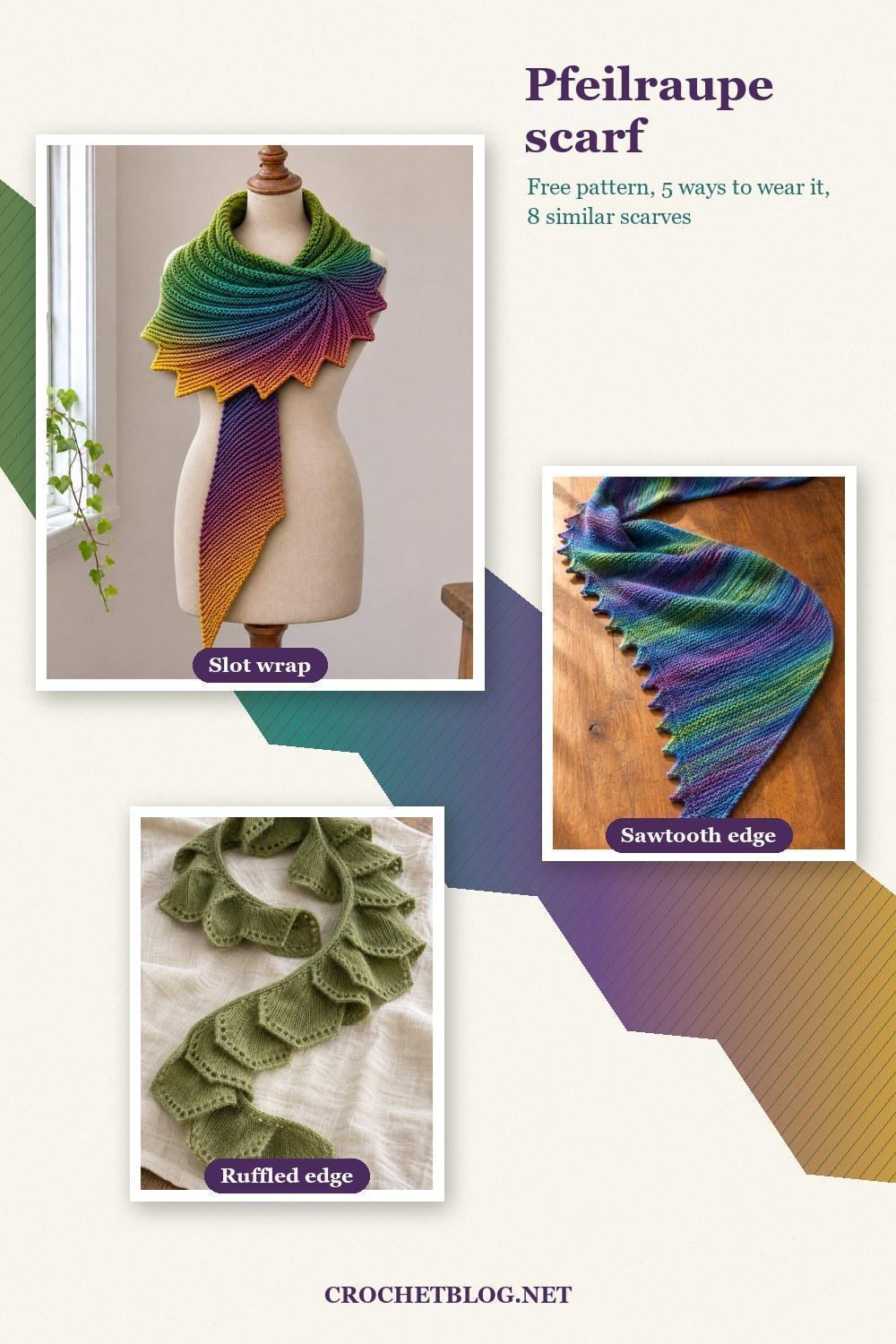
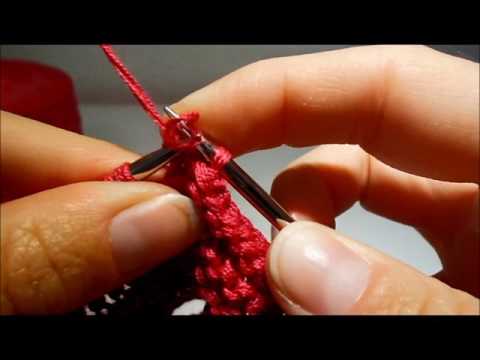
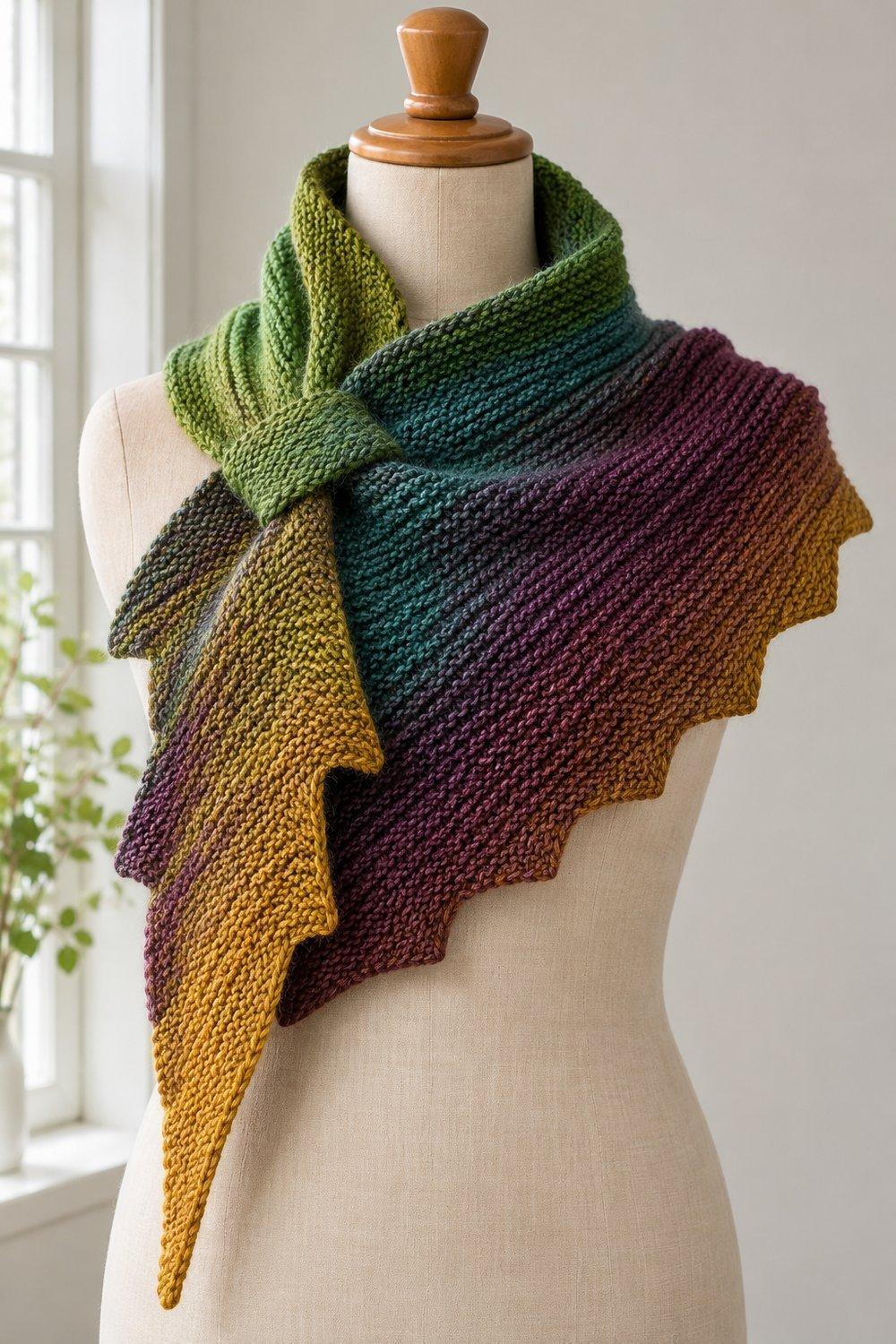
The Pfeilraupe scarf is an asymmetric knitted scarf. “Pfeilraupe” is German for “arrow caterpillar.” Alpi Alpenrose’s free Ravelry pattern is listed as a Shawl/Wrap and tagged asymmetric, triangle-shaped, short-rows, and convertible. Its slots, the openings you pull the other end through, are what Yarn Mandy’s video “Schlitze Pfeilraupe stricken” (knitting the Pfeilraupe slots) is about. Below, the slot wrap is broken into simple steps, followed by four other ways to arrange it and eight scarves with related details.
What the free pattern asks for
Start with the specifications on Alpi Alpenrose’s public Pfeilraupe knitting pattern page. Sport yarn and 3.5 mm (US 4) needles are the listed combination. The finished measurements describe the designer’s handspun sample after washing without blocking, so treat them as a reference for that fabric. English is among the available languages. You get a written pattern with a chart and photo tutorial; the listing also identifies a seamless, sideways construction worked flat. For your project, the useful starting point is this combination of yarn, needle, gauge, and measured sample.
| What | From the pattern page |
|---|---|
| Designer | Alpi Alpenrose |
| Price | Free Ravelry download |
| Yarn weight | Sport |
| Yardage | 571 yards (522 m) |
| Needles | 3.5 mm (US 4) |
| Gauge | 21 stitches and 48 rows per 10 cm (approximately 4 inches) |
| Finished size | One size; about 160 cm (63 in) long and about 45 cm (17.7 in) wide after washing without blocking |
| Techniques | Tagged short-rows on Ravelry; worked flat, sideways, in one seamless piece; written instructions, chart, and photo tutorial |
Ravelry tags the pattern with short rows, and Yarn Mandy’s video (linked below) shows how the slots are knitted. Follow the designer’s original download for the stitch sequence and slot placement.
5 ways to wear it
How to wrap it through the slot
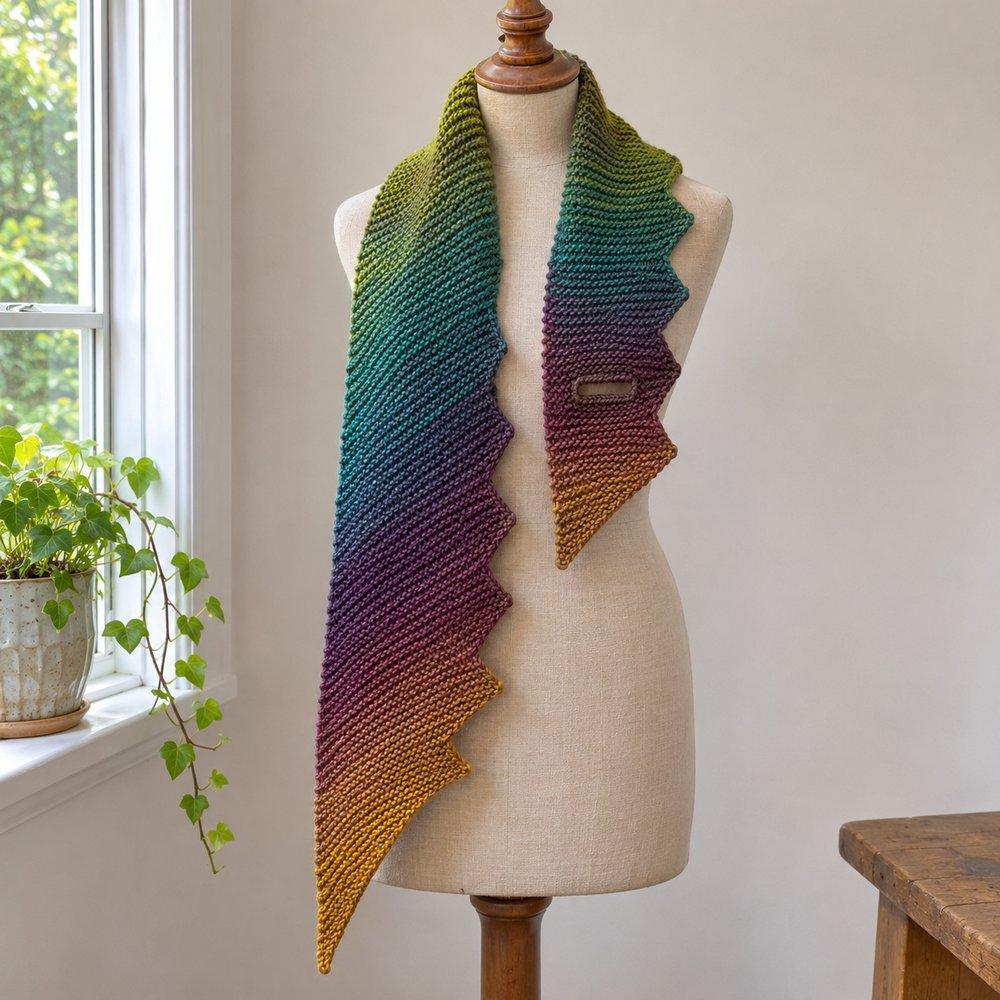
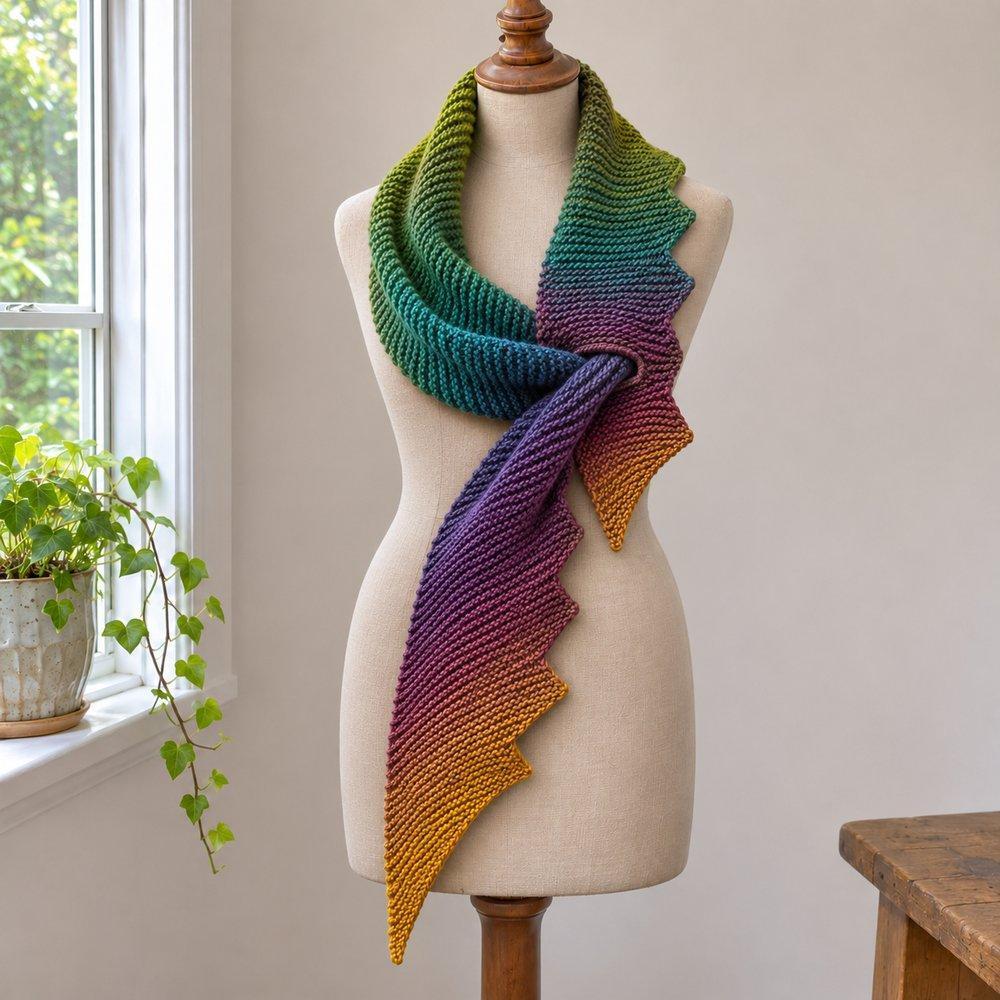
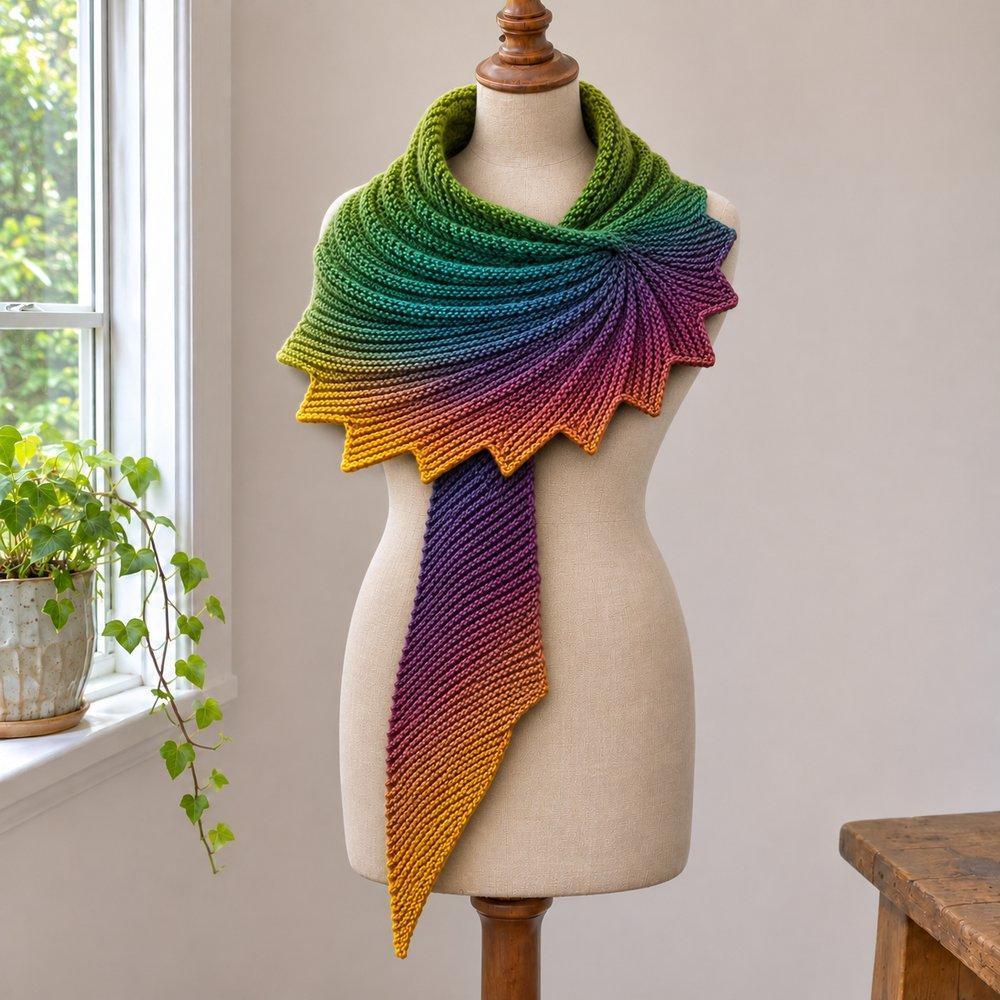
Use the pull-through principle explained by Jennifer Renaud, A Crocheted Simplicity. Her demonstration uses a crochet keyhole scarf; these steps adapt its wearing method to your knitted arrow caterpillar scarf. The opening acts as the fastening, and the amount of fabric drawn through controls the fit.
- Place the scarf around your neck.
- Bring both ends forward.
- Lay the keyhole end on top of the other end.
- Pull the other end through the opening.
- Pull more fabric through for a snugger fit.
Open shoulder drape. Spread the broader fabric across both shoulders and let the ends fall forward, adapting the shoulder drape from SHAAL’s guide to wearing a rectangular shawl. Adapt that arrangement to the scarf’s asymmetric outline, letting the broad portion cover your upper back while the tapered ends remain visible at the front.
Single-shoulder wrap. Bring an end across your chest and over the opposite shoulder, adapting the single-shoulder wrap from SHAAL’s guide to wearing a rectangular shawl. The diagonal arrangement leaves one shoulder more exposed and places the scarf’s changing width across the body. This adapts the guide’s shawl styling to your knitted scarf.
Several turns around the neck. Wind the long, narrow shape around your neck in the arrangement described for Martina Behm’s Hitchhiker, another asymmetric triangle. Apply it when your scarf has enough length for overlapping turns; the layers gather the fabric around the neckline and bring the pointed edging together.
Ends tied together. Use the long ends to make a knot, another option explicitly described on Martina Behm’s Hitchhiker page. This gives you a fastening option alongside the slot wrap. Adapt it to the length of your finished scarf, allowing enough fabric at the ends to tie comfortably.
For a closer look at the actual knitting, Yarn Mandy’s German-language video, “Schlitze Pfeilraupe stricken,” focuses on working the Pfeilraupe’s slots. It is a companion demonstration for the openings that make the pull-through arrangement possible; keep the designer’s written pattern beside you.
Similar scarves with an arrow or zigzag edge
Hitchhiker. This paid knitting pattern uses fingering yarn and 3.0 mm (US 2½) needles for a narrow garter stitch triangle. The pictured sample’s length is 172 cm (69 in) as the page prints it, with a depth of 11 inches (28 cm). Its sawtooth border develops as you knit from one end, giving you pointed edging with a different construction from Pfeilraupe. The reversible fabric suits the neck wraps described above. Martina Behm, Ravelry
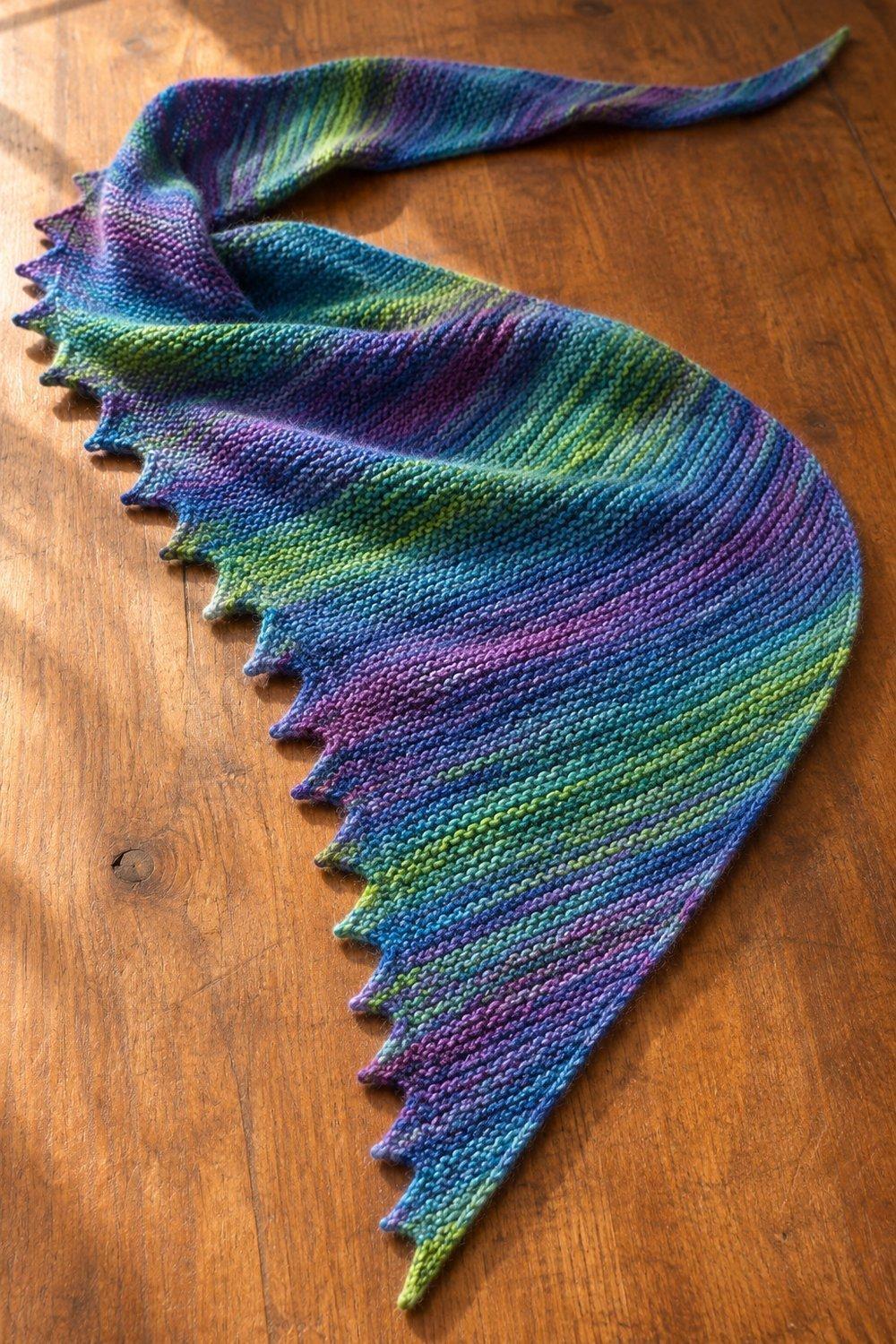
ZickZack Scarf. Knit this free design with two self-striping fingering yarns and 3.0 mm (US 2½) needles. The finished scarf measures approximately 9 by 63 inches (23 by 160 cm), with 831 yards (760 m) listed. Single increases and decreases form the chevrons. Choose this one for repeated color changes across a long scarf with pointed ends. Christy Kamm, Ravelry
Zigzag Scarf in Batik Swirl DK. This free knitting pattern uses DK yarn and a 5 mm (US 8) circular needle, 39 inches (100 cm) long. The stated dimensions are 62½ by 9¾ inches (159 by 25 cm). Work lengthwise, alternating two shades every two rows; increases and decreases create the zigzag. The sample pairs Sand Dunes with Norwegian Fjord, using one 200 g ball of each for its contrasting bands. Stylecraft, Stylecraft Yarns
With a scalloped or ruffled edge
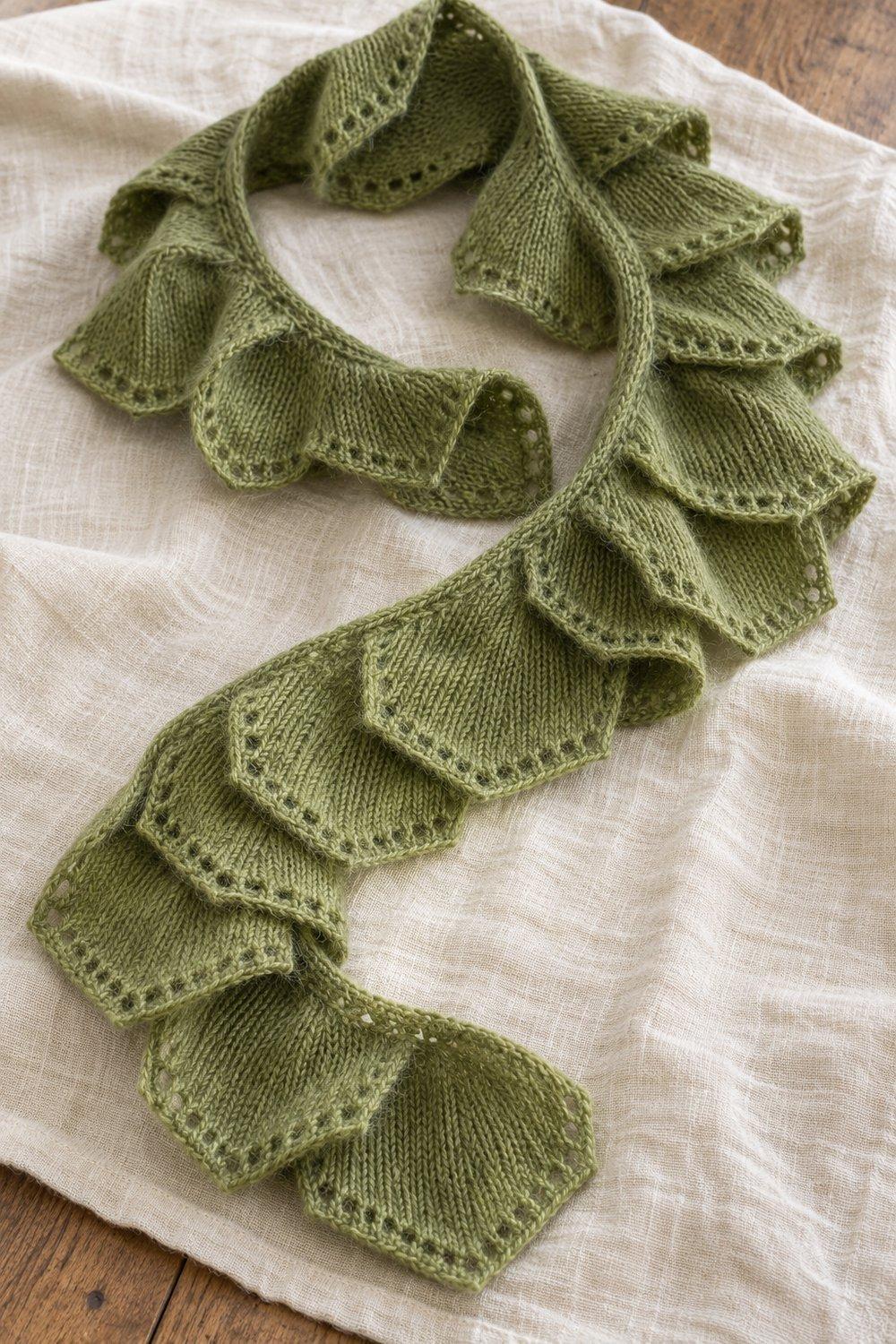
Laure. Knit this free ruffled scarf in Berroco Ultra Alpaca Light, listed as sport (described as a DK-weight spin) on the yarn overview. The pattern specifies size 5 (4.00 mm) needles, as printed, and four 50 g hanks. At approximately 5 inches across its widest ruffle and 70 inches long, Laure consists of partial hexagons with picked-up, yarn-over edging. Their overlapping corners create the layered outline. Berroco Design Team, Berroco
Piped Scallop Scarf. This free online knitting pattern uses super bulky yarn with 12 mm (US 17) needles, plus 10 mm (US 15) double-pointed needles for the border. Its finished size is 75 by 7½ inches. Increases and decreases shape the garter stitch scallops, then a contrasting applied i-cord outlines them. Choose it for rounded waves emphasized by a separate color around the edge, with a paid printable PDF also available. Rachel Alford, Cozy Nooks Designs
Feather and Fan Shawl or Scarf. Estelle’s free EP111 knitting pattern gives a scarf version using one 100 g skein of Arequipa or Cadenza and 5 mm (US 8) needles. The PDF names those yarns without assigning a US weight category. The blocked scarf measures approximately 9 by 45 inches, with a potentially shorter Cadenza version. Yarn overs and k2tog form the feather-and-fan waves, framed by garter stitch borders. Estelle Designs and Sales Ltd, Estelle Yarns
Keyhole and slot scarves
Jiffy Keyhole Scarf. Edie Eckman’s knitting pattern has a free version on her blog and an optional paid PDF. It uses bulky Cascade Yarns Baby Alpaca Chunky and US 10 - 6.0 mm needles. The listed size is 6" [15 cm] wide x 33" [84 cm] long. The fabric is elongated garter stitch, and the keyhole lets you pull one end through. Edie Eckman, Ravelry
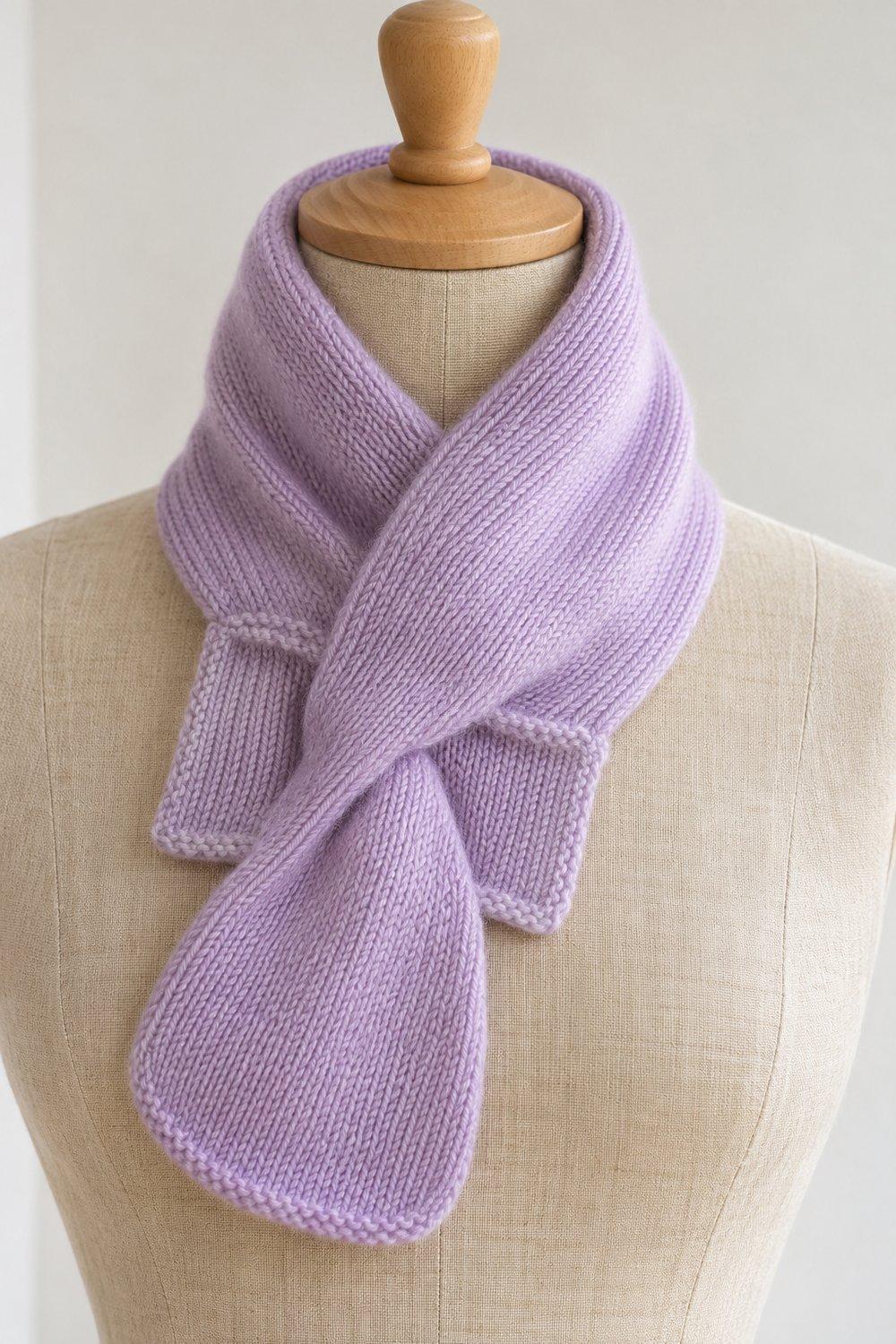
Garter Stitch Keyhole Scarf. Vickie Danielsen’s free knitting pattern measures 45 by 7 inches (114 by 18 cm). It names Patons Canadiana, using two strands together on 5.5 mm (US 9) needles, with a single-strand option on 5 mm (US 8) needles. You divide the stitches to work the opening’s sides separately before rejoining them. The all-garter fabric lets you concentrate on that small construction change and the practical pull-through fastening. Vickie Danielsen, Simple-Knitting
For more projects, explore these collections of ideas for using crochet triangles and crochet cardigan and sweater coat patterns.
CHECK MORE CROCHET PATTERNS